WILD FIRE SMOKE, PARTICLE MATTER & THE MUCOSA
The year Lytton burned down was the beginning of my true wild fire anxiety. Not that the threat of incoming devastation was impossible, before, but now, every summer comes with the threat of, whose town will burn down next.
Wild fires, directly, threaten towns and cities across the intensely logged landscapes we call Canada, and without fire management culture, we are so simply fucked in the path of flames. Fire season grows in intensity and burns down the world and also western cities, their landfills and gas stations and asbestos insulated homes. The chemical composition of smoke, already so threatening to our health, becomes laden with new challenges to our immune systems, mucosa, and lung systems.
While the list of fire preparedness is lengthy for anyone living rural or secluded from fire fighting infrastructure, I want to focus on understanding the health impacts of wildfire smoke and formulating a little to support a body in managing the heat and the stress and the smoke and the fear.
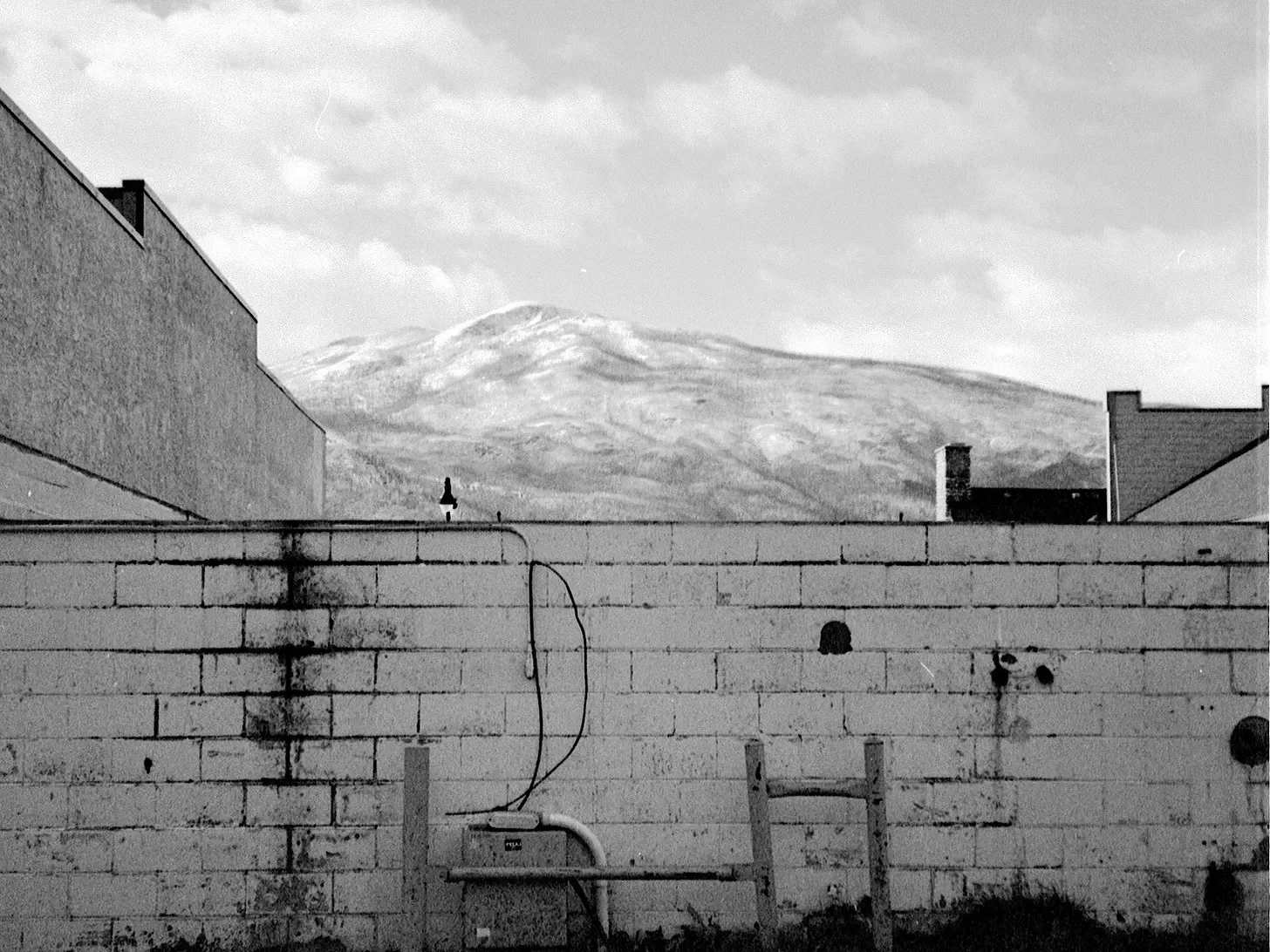
jasper, post-fire
THE LUNGS
The metaphor of a tree is actually quite accurate in imagining the function of the lungs. The main trunk of the airway, the trachea, begins in the throat at the larynx and branches off into two branches, the bronchi, surrounded by the two lobes of the lung. The bronchi again split into smaller branches, bronchioles, before terminating in alveoli, or little leaf clusters. The alveoli are surrounded by a capillary network that perform air exchange on a cellular level, and circulate blood directly back to the heart for propulsion out into the body.
The lungs are lined with tiny brushes, or cilia, that are attached to mucous secreting goblet cells. When particles enter the lungs, they become trapped on the mucous layer on the surface of the airway, and the cilia brush it all up towards the mouth to be either swallowed unconsciously. This is the mucociliary escalator, who sways in a wave from the bronchioles to the upper airway to clear the lungs of debris, much like a little wind in the branches.
Interestingly and as an aside - if you have ever heard that there are bitter taste receptors in the lungs, you heard right, and they are found in ciliated cells. They are chemosensory organelles innervated by the parasympathetic nervous system and communicating, capable of tasting your dart and simulating your rest and digest instincts.
WILDFIRE SMOKE
Carried on the wind, wildfire smoke plumes are like an omen or a shadow or a curse. Diluted by distance but never the less ominous, for hundreds of kilometres surrounding fires spread the airborne imprint of what was burnt. Wildfire smoke is composed of countless combustions, whose effects on the body will vary. It will land in your lungs, your heart, your blood, your immune system, your skin, your cognition and your nerves. Here is some parts you might breathe in.
PARTICLE MATTER
Particle matter is a conglomerate of particles, solid and gas, fused together by the heat of wildfire and the most studied danger to respiratory health. Organic materials, elemental carbon, heavy metals and the crust of the earth. Differentiated by diameter, (10, 2.5 & 0.1 μm), the smaller the particle the deeper it travels into the lung tissue. Incredibly toxic, we inhale these particles into the airways, our alveoli, the sacs of tissue that exchange carbon dioxide with oxygen into our blood stream.
Once embedded in our mucosa, particle matter begins to react and oxidize, like a bruise on an apple. The mucosa react, and begin to flood the airways to flush out the toxins. Simultaneously, our ciliary elevator is hindered. With a disruption to the synchronized removal of debris, pollutants linger in our lungs and compromised mucous can become a host for bacterial infection. Perhaps it is the varied chemical composition of the particle matter speaking to our autonomic nervous system through our chemosensory cilia, maybe it is the immune response cascading in our airways, perhaps the direct transportation of unknown horrors across our capillary beds and directly to the heart. Regardless, the smoke makes it’s way in, damaging tissue and cells all along the way. At the least, this is an inflammation nightmare.
NITROGEN OXIDE + DIOXIDE
Toxic and poisonous gasses, emitted when wildfire eats the industrial creations of western civilization. At high temperatures, nitrogen reacts with oxygen to produce nitrogen dioxide. Reactive, poisonous, and fatal if inhaled in large quantities. In the epithelial lining, these gasses oxidize and cause mast cell degranulation + histamine responses, which destabilize mucosal integrity and increase inflammation. This accelerates allergic responses and activates airway hyperresponsiveness, activating or exacerbating asthma symptoms and bronchoconstriction. Impaired epitherlial barrier function will decrease immune responses in the lungs and damage the ciliary elevator, which clears the lungs of fluids. This loss of function puts us at risk of respiratory tract infections, or infiltration of viruses and bacteria through the lungs.
AIRBORNE BACTERIA
Soil, scorched, released bacteria and fungus into the plumes, becoming viable and atmospheric. They would love to enter through the little holes the smoke burns through.
SUMMARY OF EFFECTS
Long term respiratory effects, including asthma, COPD, cancers and infections, are commonly listed in studies on the subject. Impacts of inflammation, immune and nervous system dysregulation are less studies but predictive. Children, who breathe more air for their body weight than adults, and seniors, who bring a life’s worth of struggles into a fire, are more susceptible. In essence, take care of yourselves, your neighbours and the children around you during forest fire season.
HERBS TO BREATHE BETTER
As a clinical herbalist, I was trained to understand the anatomy of a human person, the pathology of disease, and relate herbs for their actions, organ affinities and energetics. Here is a break down for herbal students in the room. Let good not be the enemy of perfect - use what you have in effective formulas when the smoke hits you. Simple formulas will be provided at the end for those with more limited herbal knowledge.
DAMAGE DONE - ACTIONS NEEDED - HERBS WITH LUNG AFFINITY
ciliary depression - Tussilago farfara
mucosal overwhelm - anti-cattarhals, expectorants - Plantago lanceolata, Euphrasia spp, Inula helenium, Angelica archangelica, Sambucus nigra fol., Verbascum thspsus, Solidago virgaurea, Nepeta hederacea
mast cell degranulation + histamine response - anti-allergenics, immunomodulators, PAF inhibitors - Ephedra, Scutellaria bicalensis, Astragalus membranaceous, Zingiber spp, Cinnamomum
secondary infections - antimicrobials - Allium sativum, Thymus vulgaris, Hydrastis canadensis
increased metabolic waste - hepatics, alteratives, diuretics - Taraxacum officinalis fol. & rad., Arctium lappa, Galium aparine
autonomic nerve dysregulation - diffusives, nervines - Lobelia inflata, Echinacea purpurea, Hyssopus spp., Marubium vulgare, Grindelia comporum
capillary damage, reduced air exchange - inhalation of peppermint and eucaplyptus essential oils, Ginkgo biloba
cardiac cell damage - cardiac tonic - Crataegus oxycantha flos + fruc
FORMULAS
INFUSIONS
FOR SMOKY TIMES - Elderflower, Cleavers, Thyme, Fennel, Ginger. Equal parts, steep covered for 15 minutes, drink twice daily.
SURROUNDED WITH SMOKE - Hyssop, White Horehound, Plantain, Ginger, Cinnamon. Equal parts, steep covered for 15 minutes, drink twice daily.
FEAR, MOSTLY - Hawthorn flower + berry, Dandelion leaf, Catnip, Aniseed, Ginger. Equal parts, steep covered for 15 minutes, drink twice daily.
DECOCTION
COUGHING FIT - Echinacea root, Elecampane root, Dandelion root, Burdock Root, Garlic, Ginger. Simmer on low for 20 minutes, drink twice daily.
TINCTURE
BREATHE, NOW - Ephedra (1 pt.), Lobelia (1 pt.), Echinacea (2 pt), White Horehound (2 pt). Ginger (1 pt.) 5 mL drop dose until airways open. Careful of overuse - you will puke.
EYE DROPS
50:50 Euphrasia and Calendula 25% tinctures with boiled water in sterile dropper bottle, 2 drops per eye. Discard contents and re-sterilize bottles for reuse after 48 hrs.
EYE RINSE
FOR CHELSEA - Chamomile, Plantago major, Euphrasia, Calendula. Mix a teaspoon of dried herb into half a liter of water. Cool and apply clean compress.
Please exercise caution with herbs and work from within your skill set and experience. this is not medical advice. As always, my herbal practice is open to book through my website.
xoxoxox
carmie
Rizzo, Luciana V, and Maria Cândida F V Rizzo. “Wildfire smoke and health impacts: a narrative review.” Jornal de pediatria vol. 101 Suppl 1,Suppl 1 (2025): S56-S64. doi:10.1016/j.jped.2024.11.006
Bustamante-Marin, Ximena M, and Lawrence E Ostrowski. “Cilia and Mucociliary Clearance.” Cold Spring Harbor perspectives in biology vol. 9,4 a028241. 3 Apr. 2017, doi:10.1101/cshperspect.a028241