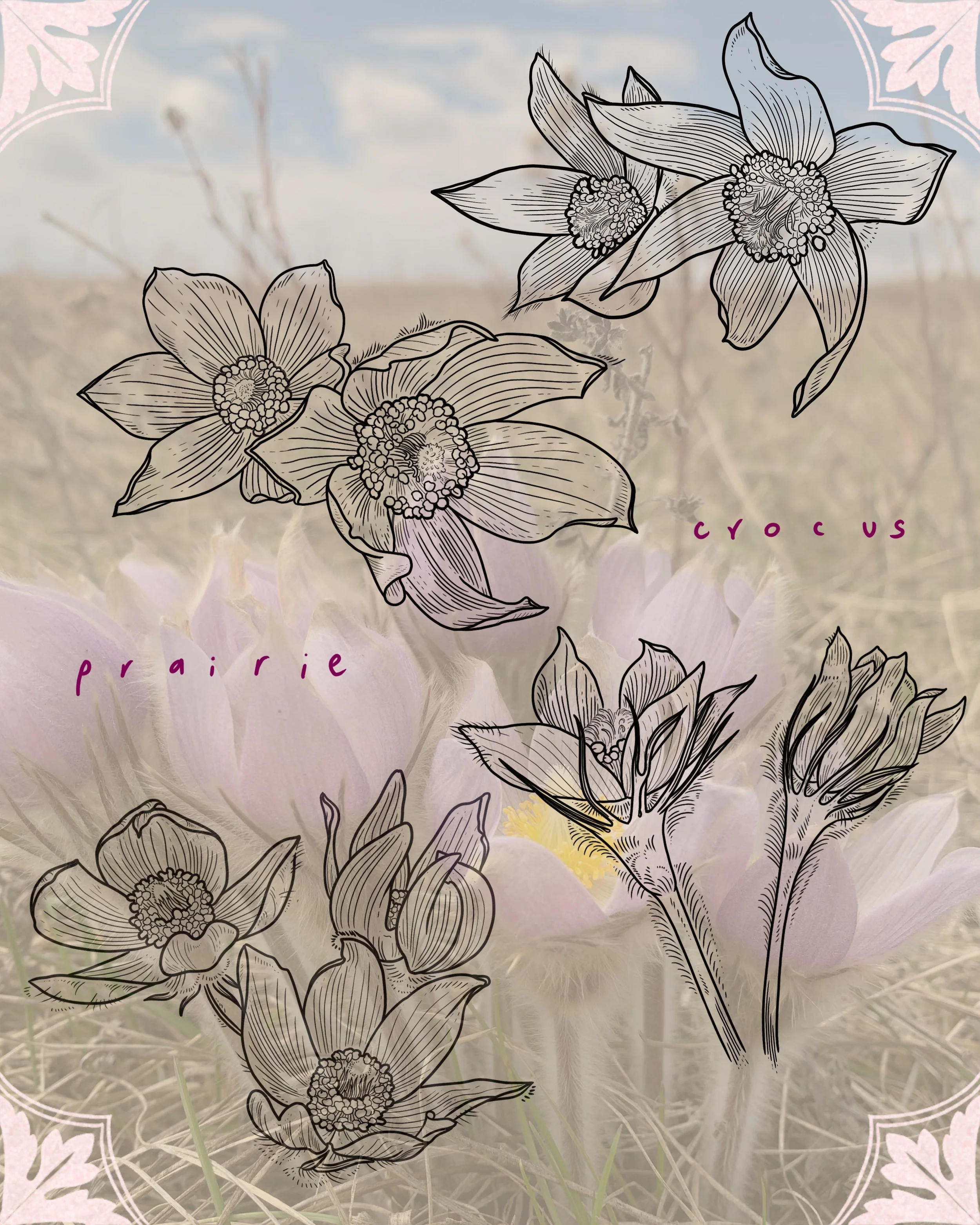
PRAIRIE CROCUS
SPECULATION ON NAMES & RELATIVES
I met my first prairie crocus high up on the hill on a seriously foggy and windy day. While well past the spring equinox, the Euro-pagan festival Ostara, the weather at this altitude was keeping all plant buds at bay. On the hill, I was in a cloud, and wrapped against the storm, the small purple cluster of flowers appeared like a mirage.
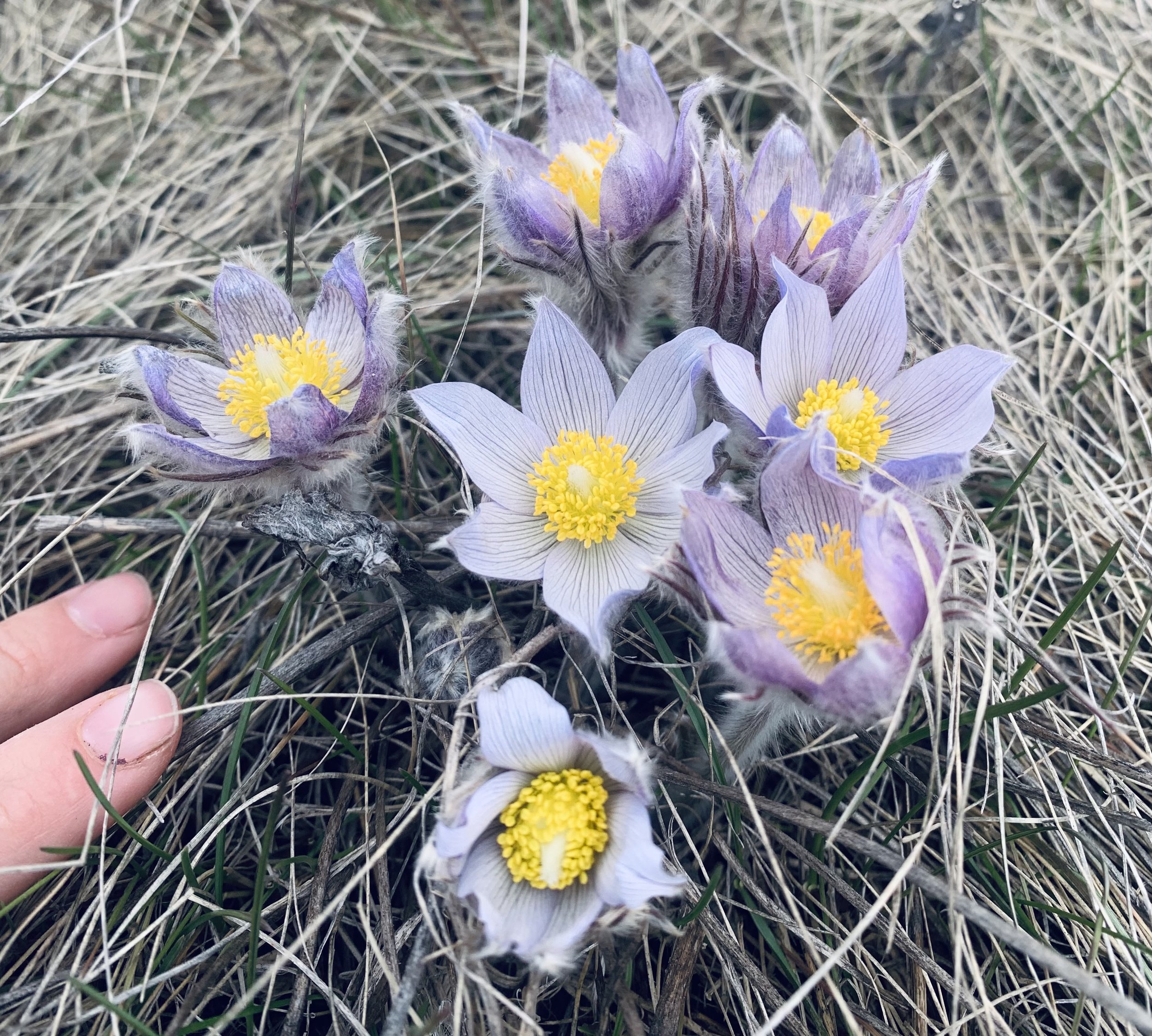
Prairie crocus, my friends explained. And yet its small fuzzy body, so carefully low to the ground, made me think only of the high alpine bitter and toxic nervine known to me in Herbalism, Anenome pulsatilla or Pulsatilla vulgaris, depending on the reference book. Known commonly as Pasque flower, this European herb grows in high alpine meadows and is regarded for its impacts on the nervous system, with a toxicity warning that plant material causes tissue irritation and GI upset when used incorrectly.
It took only a cursory search to i.d. this iconic and first prairie wildflower as Pulsatilla nuttaliana, a close relative of the European Pasque flower. These spring marvels are a part of the buttercup family and are not even a little bit a crocus - a series of plants from the lily family. I do find common names delightful adventures in ethnobotany, as plants tend to be named commonly for the impressions they made on early English speakers, and not necessarily their plant families or relationships. I speculate that "crocus" could be synonymous with "first spring flower", especially if she is purple and grows low to the ground.
Pasque flower, on the other hand, arrives around the time of "Easter", a festival dating back to Anglo-Saxon practice of veneration of the goddess Ēoster, or Ostara. Her festival gave name to the month we know now as April, and later the Christian festival of Easter. Pasque, french for Easter, speaks to this flower's long association with the coming of spring, goddesses of Pagan European culture, and symbolizes rebirth in the popular Language of Flowers.
PULSATILLA VULGARIS IN HERBALISM
The European Pasque flower is taught in herbalism as a delicate nervine to be used with care. This plant can be easily over used, causing severe mucosa and GI inflammation. Its glycoside rannunculin breaks down quickly into an acrid volatile oil, meaning that only fresh plant preparations are appropriate.
When used correctly, Anenome pulsatilla / Pulsatilla vulgaris behaves as a central nervous system depressant and antispasmodic to the smooth muscle system. Remedial in pelvic complaints, neuralgias, spasmodic coughs and asthma, this plant can also be used topically as a strong antibiotic on boils and infections. Energetically indicated for those who experience sudden and strong fears of death, the onset of disassociated panic, or a grief that shakes them like the wind.
At best unpleasent, at most toxic, the medicine of the Prairie Crocus might be remedial to the harsh spring weather of the prairie plateaus where they grow.
During my cursory plant name check, I came across sources citing Indigenous use of Pulsatilla nutalliana by the Blackfoot here in Mohkinstsis. While I have no doubt that the original stewards of this land have nuanced and specialized uses for this poisonous remedy, it is considered here unethical to pick the Prairie Crocus during it's season. Its medicinal uses will remain speculative to me until all the fescue habitat is regrown over its traditional territory and the wild flowers are no longer at risk. Towards this future.
As always, my herbal practice is open to book through my website. For those interested in the magic of herbal medicine, and what it might look like to invite a plant into conversation about your health and life.
xoxoxox
carmie
if you enjoyed this blog post, please consider supporting my work on patreon. my writings will always be free, and your patronage helps me focus on creating the content, art and clinical practice that calls me. thank you for your generosity <3
please exercise caution with herbs and work from within your skill set and experience. this is not medical advice. contact a registered herbalist or physician with questions on safe use of herbs. tysm!